Key takeaways
- The MP2000 moves loads up to 2,000 kg and can complete a fork‑in cycle in about 20 seconds.
- It relies on 3D LiDAR and depth cameras for perception and can adapt to both standard and non‑standard pallets.
- Deployment is marketed as plug‑and‑play, with environment mapping done in minutes and no need for dedicated reflectors or QR codes.
- Fleet intelligence works locally and at the fleet level, even when the network is offline.
- Early field reports note a manual‑override mode and a charging pattern of 2–3 hours every 6–12 hours.
What the MP2000 is
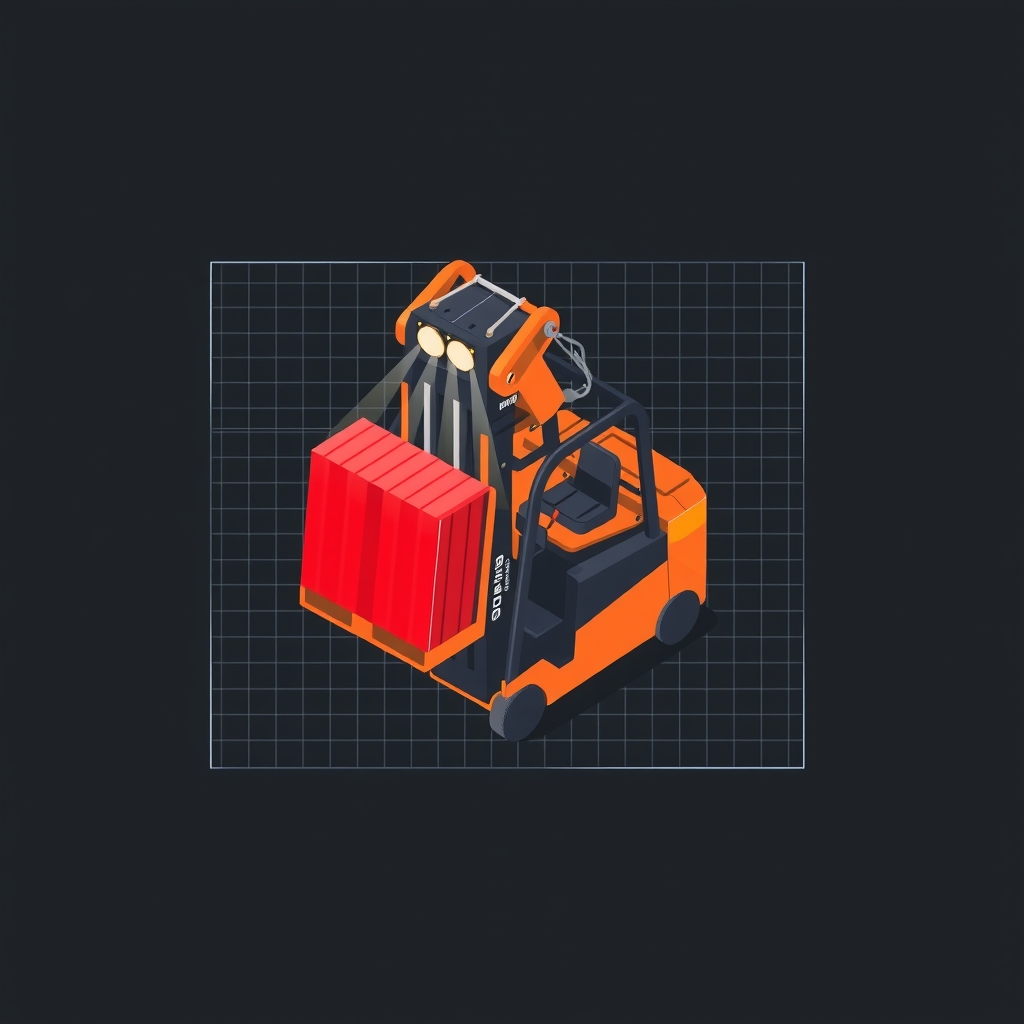
Pudu Robotics introduced a new heavyweight AMR that it calls the MP2000. The robot is positioned as an autonomous pallet handler for warehouses, logistics centres, and factories. It is built to carry pallets from one floor level to another without the extensive site work that traditional forklift automation often demands.
Core specifications
| Spec | Value | Source |
|---|---|---|
| Payload capacity | 2,000 kg | https://app.dealroom.co/news/feed/pudu-robotics-unveils-ai-native-mp2000-pallet-handling-robot-with-2-000-kg-capacity |
| Fork‑in cycle time | ≈20 seconds | https://www.therobotreport.com/pudu-robotics-launches-new-mp2000-autonomous-forklift/ |
| Sensors | 3D LiDAR + depth cameras | https://www.therobotreport.com/pudu-robotics-launches-new-mp2000-autonomous-forklift/ |
| Supported pallet formats | three‑runner, perimeter‑base, custom loads | https://www.therobotreport.com/pudu-robotics-launches-new-mp2000-autonomous-forklift/ |
| Manual‑override capability | Powered manual forklift mode | https://www.therobotreport.com/pudu-robotics-launches-new-mp2000-autonomous-forklift/ |
| Charging pattern (typical) | 2–3 h charge every 6–12 h | https://mugglehead.com/pudus-new-mp2000-challenges-forklift-giants-in-warehouse-automation/ |
Payload and speed
The machine’s payload rating of 2,000 kg puts it in the same class as conventional industrial forklifts, but its autonomous operation is meant to free operators from repetitive lifting tasks. In laboratory demonstrations the robot could place its forks onto a pallet in roughly 20 seconds, a figure repeated across the launch announcements.
Perception and navigation
Pudu equips the MP2000 with a combination of 3D LiDAR and depth cameras. Those sensors are used for two purposes:
- Obstacle detection – the robot can spot low‑profile and overhead objects, then reroute in real time.
- Pallet identification – the system validates pallet size, orientation, and even adjusts for misalignment before the fork‑in motion.
The perception stack is described as AI‑native, meaning that the robot runs inference on‑board to interpret sensor data without a separate cloud service. This enables it to handle non‑standard load carriers as well as the common three‑runner and perimeter‑base pallets listed in the specs.
Deployment and fleet intelligence
Pudu markets the MP2000 as a plug‑and‑play solution. The robot can map a warehouse and create a navigation plan in minutes, and it does not require reflective markers, QR codes, or other site‑specific infrastructure. The relevant launch text notes that the robot supports “minutes‑level deployment”.
Beyond a single unit, the platform includes a distributed intelligence layer. Each MP2000 makes local decisions, while a fleet manager coordinates multiple robots to avoid task clashes. Notably, the fleet logic continues to function when the external network drops, a capability referred to as offline fleet coordination.
Operators retain a manual‑override that converts the autonomous unit into a traditional powered forklift. This dual‑mode flexibility is highlighted as a way to bridge the gap between existing manual processes and full automation.
Early market signals and adoption
The MP2000 was publicly unveiled on Aug. 18 2026. In the same press release the company noted that the robot can insert its forks in 20 seconds, and that operators can switch it to manual mode.
A separate analysis from Frost & Sullivan places Pudu Robotics at the top of the global commercial service‑robotics market by revenue and shipment volume, with over 130,000 robots shipped to customers in more than 85 countries. While that figure covers the company’s entire portfolio, the MP2000 adds a heavier‑load capability to a line that previously included the T300 (2024, >4,000 units shipped in year one), the T600 (2025), and the T150 (early 2026).
The launch coincides with speculation that Pudu will pursue a Hong Kong IPO, though no listing date has been announced.
Considerations for adopters
- Speed vs. human operators – The 20‑second fork‑in time is comparable to a human driver’s cycle, but the robot can run continuously, only pausing for a 2–3 hour charge every 6–12 hours.
- Infrastructure‑free rollout – The ability to map a facility without reflectors or QR codes reduces upfront engineering costs, but sites with unusually cluttered aisles may still require layout tweaks.
- Fleet management – Offline coordination is a useful safety net, yet customers will need to integrate Pudu’s fleet‑level software with existing warehouse‑execution systems.
- Manual mode – The dual‑mode design helps with change‑over, but training staff to switch between autonomous and manual operation adds a procedural layer.
Outlook
The MP2000’s specifications – a 2,000 kg payload, AI‑driven perception, and rapid deployment – mark a clear shift toward heavier‑load autonomous material handling within Pudu’s product line. The company’s existing market position and its plan for a Hong Kong listing suggest that it will continue to invest in scaling the platform, though real‑world performance data beyond the launch announcements remain limited.
The article draws on launch announcements and market data published in August 2026.
Sources
This article was researched and fact-checked against the following sources:
- Pudu Robotics launches new MP2000 autonomous forklift - The Robot Report (therobotreport.com)
- Pudu Robotics unveils AI-native MP2000 pallet handling robot with 2,000 kg capacity | Dealroom.co (app.dealroom.co)
- Pudu Robotics Launches PUDU MP2000, an AI-Native Pallet Handling Robot, to Simplify Autonomous Pallet Handling for Industrial Logistics (prnewswire.com)
- Pudu's new MP2000 challenges forklift giants in warehouse automation - Mugglehead Investment Magazine (mugglehead.com)
- Pudu Robotics launches PUDU MP2000 pallet robot - Engineering.com (engineering.com)