Key takeaways
- The deployment campaign started on 17 August 2026, introducing the first three health‑system partners.
- Initial anchor sites are Endeavor Health Edward Hospital, Providence Saint John’s Health Center and Children’s Hospital Los Angeles.
- Swapping in an NVIDIA‑powered A2000 compute module lifted Moxi 2.0's environmental perception speed by a factor of roughly ten to fifteen versus the first‑generation robot, alongside a tenfold jump in onboard processing headroom.
- A single charge now carries the robot through about nine hours of active work, and a charging cycle that is roughly 30% quicker lets fleets stretch daily uptime toward eighteen hours.
- Children’s Hospital Los Angeles reported more than 40 000 deliveries, translating to over 16 000 hours of staff time saved, and noted a utilization increase of more than 10 % in Q2 after adding a third unit.
- Diligent calls the platform a learning‑flywheel World Model that continuously improves from fleet‑wide data and can be installed without modifying existing hospital facilities.
Rollout timeline and anchor hospitals
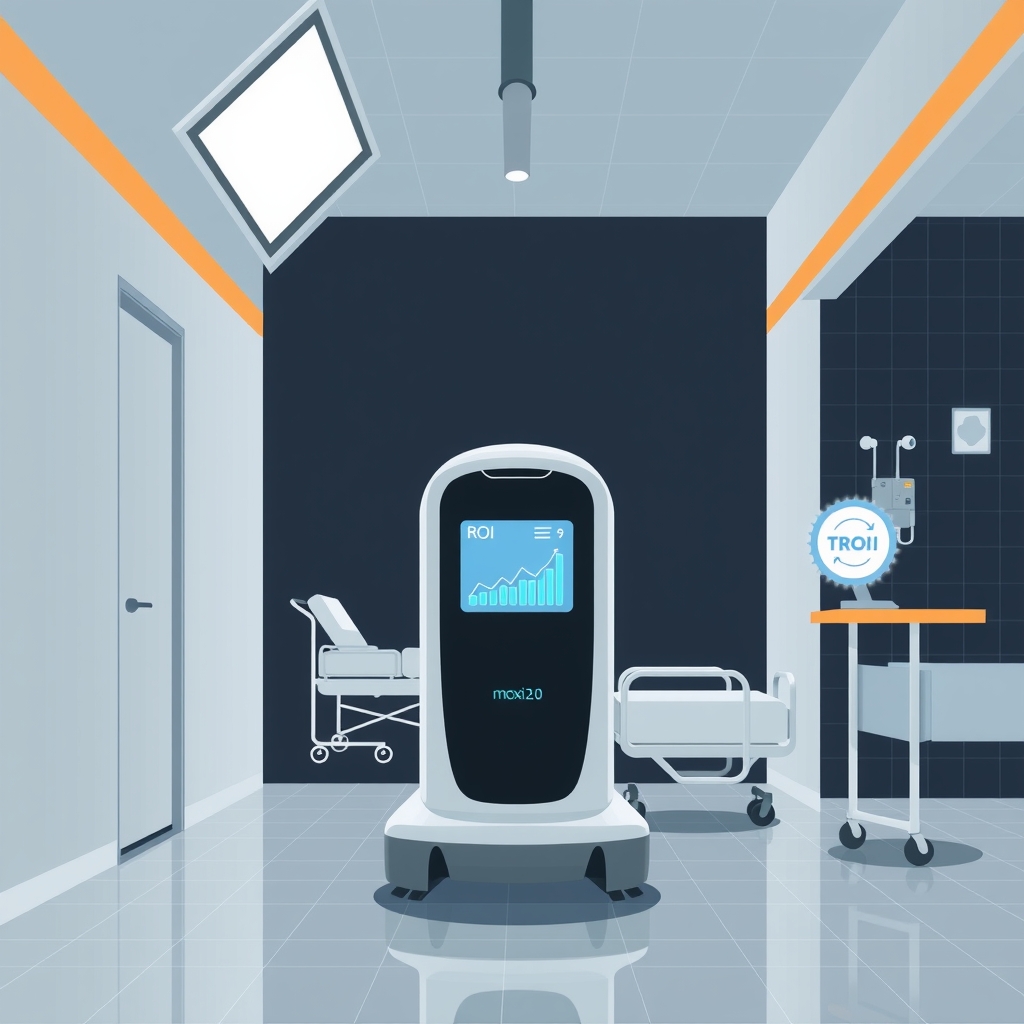
On 17 August 2026 Diligent Robotics announced that it had begun shipping the next‑generation robot to health‑system customers throughout the United States. The launch highlighted three anchor locations: Endeavor Health Edward Hospital, Providence Saint John’s Health Center and Children’s Hospital Los Angeles. Diligent also mentioned that additional orders are pending from other hospitals.
Technical upgrades driving faster service
Perception and compute
Moxi 2.0 replaces its predecessor's processor with an NVIDIA‑powered A2000 compute module. Diligent credits that swap with a ten‑to‑fifteenfold jump in how quickly the robot reads and reacts to its environment, plus roughly a tenfold increase in onboard processing headroom for planning and navigation tasks.
Battery life and duty cycle
A full charge now keeps Moxi 2.0 working for up to nine hours, and a roughly 30% quicker charging cycle means a fleet can be topped up between shifts to cover as much as eighteen hours of operation across a day.
Sensors, storage and ergonomics
The refresh adds a larger camera array and a lidar‑based sensor suite, expands on‑board storage drawers, and introduces redesigned handles that were shaped by feedback from nurses and pharmacy staff.
Learning‑flywheel World Model
The rollout is paired with Diligent’s proprietary learning‑flywheel, a World Model that aggregates experience from every robot in the fleet. Data are streamed to a cloud training environment built on Amazon SageMaker HyperPod, while T‑Mobile for Business supplies cellular fallback for areas where Wi‑Fi coverage is limited. This loop is intended to sharpen perception, improve edge‑case handling, and boost overall task execution over time.
Early ROI signals
Children’s Hospital Los Angeles disclosed concrete usage metrics. The robot has completed more than 40 000 deliveries, which Diligent translates into over 16 000 hours of staff work that no longer needs to be spent on transport tasks. After expanding the fleet from two to three units, the hospital reported a utilization lift of more than 10 % in the second quarter.
These numbers illustrate how a higher‑throughput robot can offset labor costs and free clinicians to focus on direct patient care. Although Diligent has not published a unit price, the delivery volume and utilization bump suggest a measurable efficiency gain for early adopters.
Market context and ownership
Serve Robotics acquired Diligent Robotics in January 2026 for $29 million. The acquisition links indoor service robots with Serve’s larger portfolio of autonomous delivery hardware and brings shared investment in physical‑AI research.
Diligent’s fleet has operated in more than 25 hospitals over the past five years, providing the data foundation for the World Model.
Discrepancy in perception‑speed claims
Source 1, 2 and 3 describe the perception improvement as 10‑15 × faster, while Serve’s own press release (Source 4) states a 15 × faster figure. Both ranges stem from the same hardware upgrade, but the exact multiplier differs between corporate messaging and technical briefings.
Conclusion
The August 2026 launch of Moxi 2.0 shows how a hardware refresh—faster perception, ten‑fold compute, longer runtime—combined with a cloud‑native learning loop can translate into observable efficiency gains. Early data from Children’s Hospital Los Angeles demonstrate a high delivery count, significant staff‑time savings and a clear utilization uplift, offering the first quantitative glimpse of ROI for autonomous care robots in U.S. hospitals.
Sources
This article was researched and fact-checked against the following sources:
- Five years of operation shape Diligent Robotics rollout of Moxi 2.0 - The Robot Report (therobotreport.com)
- Diligent Robotics, a Serve Robotics Company, Begins Rolling Out Moxi 2.0 | RoboticsTomorrow (roboticstomorrow.com)
- Diligent Robotics begins rollout of Moxi 2.0 hospital robots By Investing.com (investing.com)
- Serve Launches Robot Delivery with Wonder, Adding Grubhub to Its Growing Delivery Network — Serve Robotics (ir.serverobotics.com)
- Sarah Downs Equips NASA’s Robots With Assembly Skills - IEEE Spectrum (spectrum.ieee.org)