Kinetic Blocks says its public catalogue lists 27 open robotics datasets covering almost 19,000 hours of material, with licences written in plain language. Skild AI says it pre-trains the Skild Brain with simulation and internet video, then post-trains it with targeted real-world data.
What Kinetic Blocks offers
Kinetic Blocks describes its service as an open marketplace for robotics training data. The marketplace is in beta, and users must request access before they can buy or list data.
The company says it checks each listing against the underlying files and assigns a grade from A+ to F before the listing goes on sale. A verification stamp and Kinetic Blocks Quality grade appear on verified listings so buyers can compare datasets before paying.
Its supplier network covers personal-care, construction, hospitality, industrial and household settings. Kinetic Blocks also says it can source datasets that do not already appear in the marketplace.
How the marketplace grades and handles data
Kinetic Blocks assigns 30% of its overall grade to technical quality, 25% to temporal integrity and 30% to content usefulness. Its published scale runs from A+ through F and does not include an E grade.
Sellers retain ownership of their data, according to the marketplace. Their files remain read-only, and sellers choose the price, licence and exclusivity terms.
Kinetic Blocks has also linked data ownership to deployment decisions. In its newsletter, the company wrote that three unrelated businesses during a Stuttgart conference called the Humanoid Robots Summit independently identified data ownership as the question that determines whether a deployment happens. That is Kinetic Blocks’ account of those discussions.
How Skild AI trains the Skild Brain
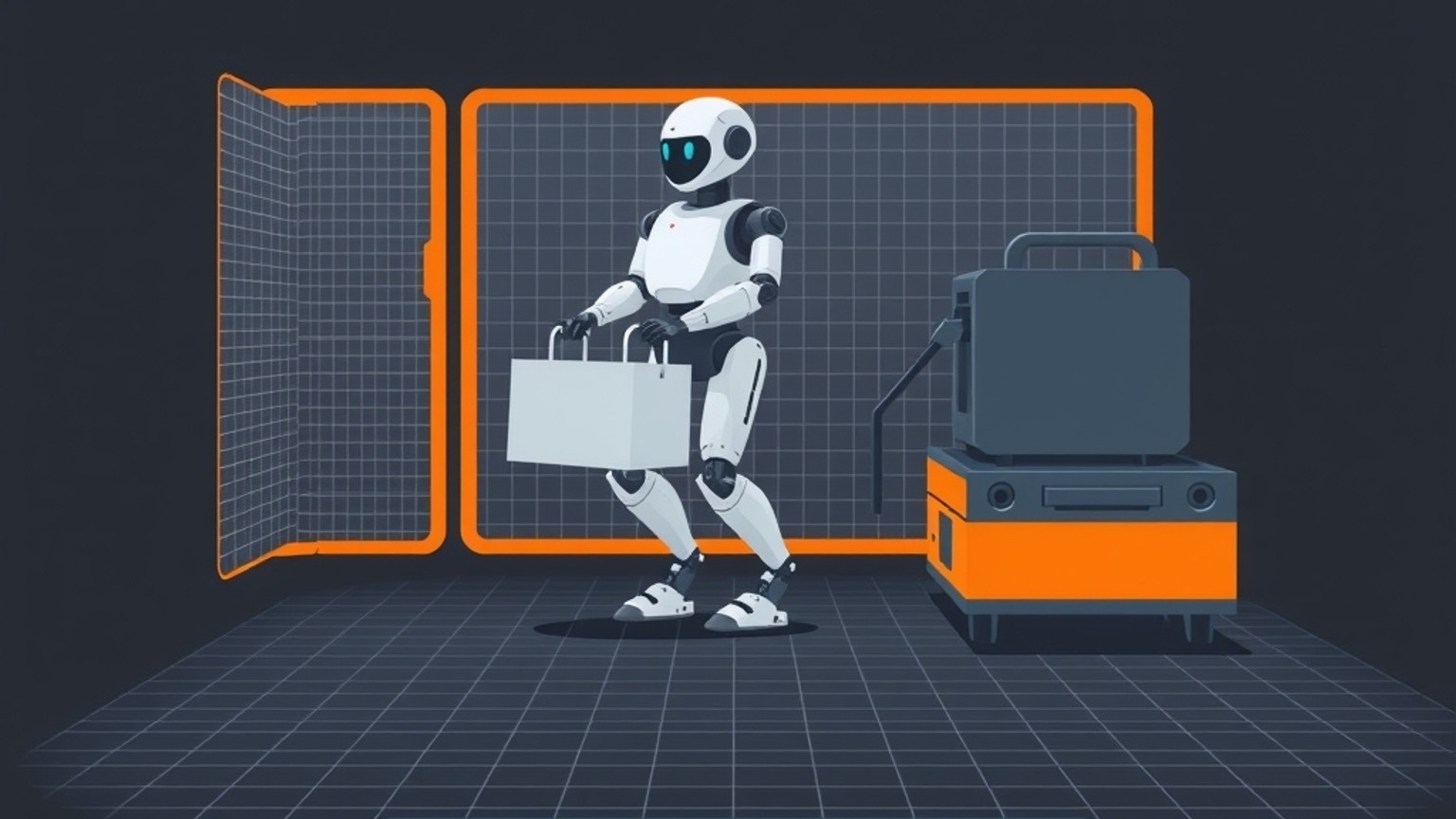
Skild AI calls the Skild Brain an omni-bodied robotics foundation model. The company says the model can operate across quadrupeds, humanoids, tabletop arms and mobile manipulators rather than being tied to one hardware form.
The model uses a two-level architecture. A lower-frequency policy handles high-level manipulation and navigation, while a higher-frequency policy turns those commands into joint angles and motor torques.
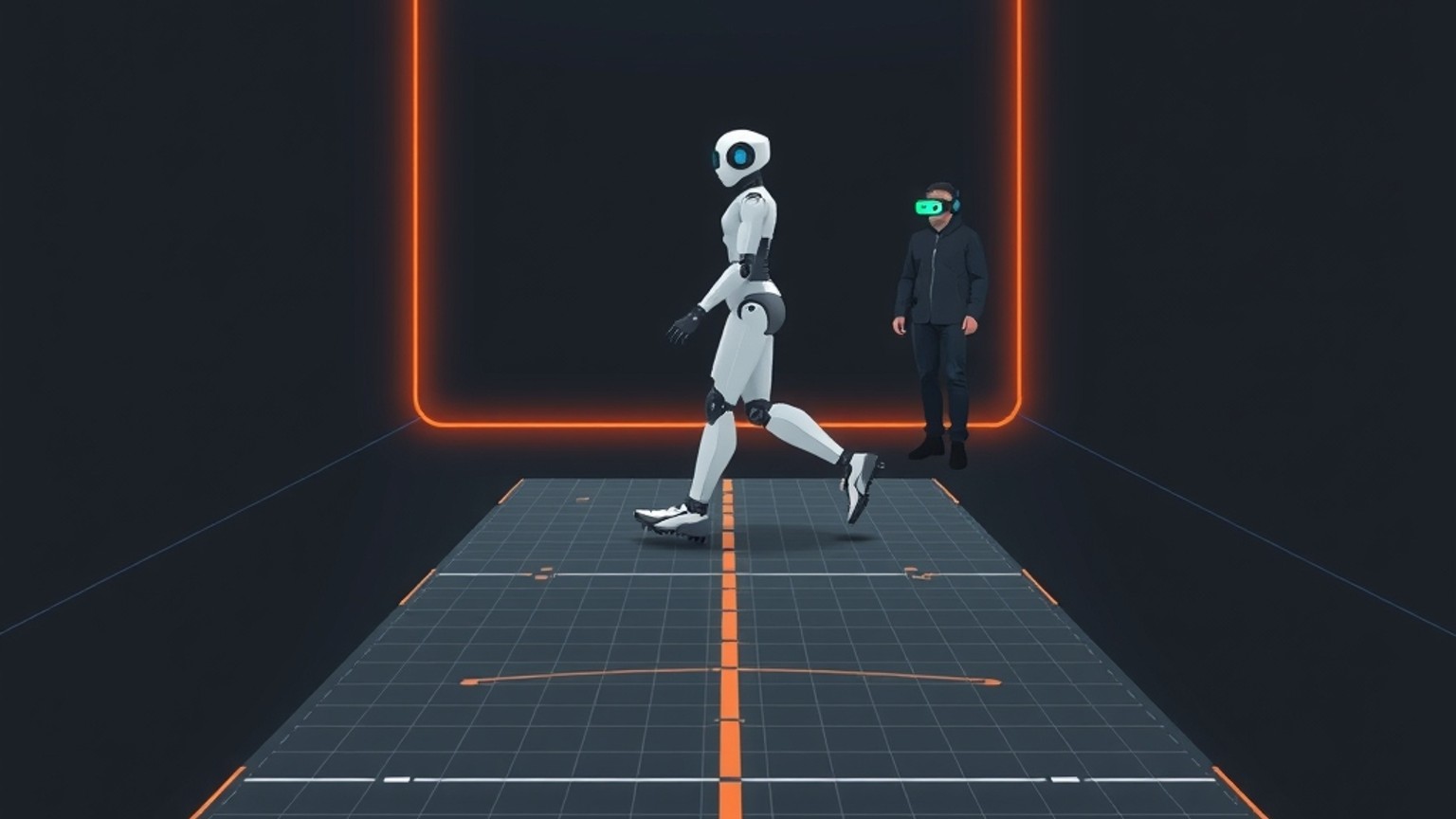
For pre-training, Skild AI says it uses large-scale simulation and internet video. It then applies targeted real-world data during post-training to produce systems for customers. The company describes the longer-term goal as one general-purpose brain that is not restricted to a single robot type or task.
What Skild AI claims about its model
Skild AI says low-force behavior allows the model to work safely around people.
CEO Deepak Pathak says the model can handle tasks such as climbing stairs under adversarial conditions and assembling fine-grained items that require visual and contact-dynamics reasoning. President Abhinav Gupta says one model can be adapted across different robot bodies and tasks, contrasting that approach with systems built for one robot or one task.
Skild AI says its team has spent more than a decade researching AI and robotics. It lists experience in self-supervised learning, curiosity-driven exploration, sim-to-real locomotion, dexterous manipulation and learning from human videos.
Sources
This article was researched and fact-checked against the following sources:
- Kinetic Blocks | The Open Marketplace for Robotics Training Data (kineticblocks.com)
- Building the general-purpose robotic brain | Skild AI (skild.ai)
- Newsletter | Kinetic Blocks (kineticblocks.com)
- Skild AI Provides First Look at Its General-Purpose Robotic Brain | RoboticsTomorrow (roboticstomorrow.com)