
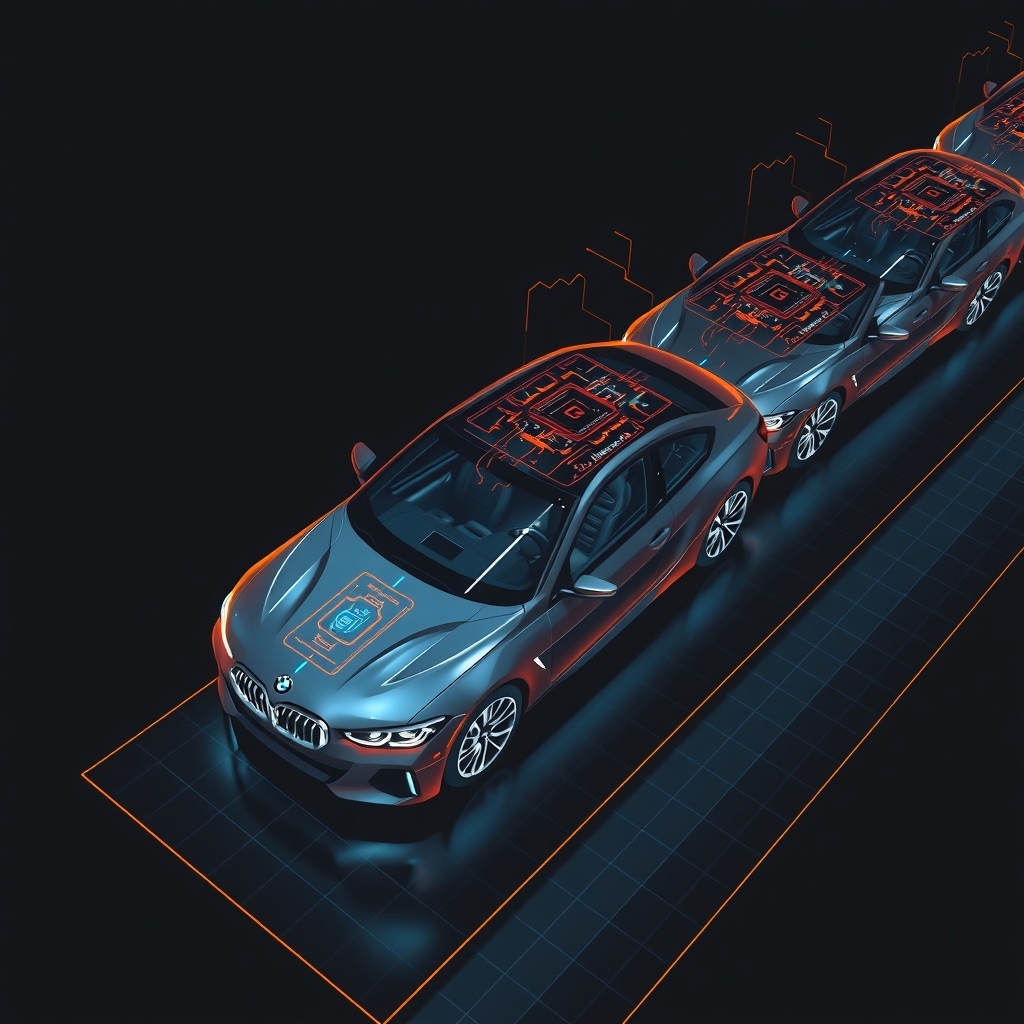
Key takeaways
- Figure AI secured $675 M in February 2024, lifting its valuation to $2.6 B.
- A January 2024 partnership with BMW puts Figure 02 and Figure 03 on an active automotive line.
- Figure 02 logged 1,250 hours, moved >90k components and helped build >30k X3s at BMW’s Spartanburg plant.
- Figure 03 adds tactile‑sensor hands, palm cameras, wireless charging and speech‑to‑speech audio, but cost remains the chief scaling hurdle.
- Figure AI employs ~600 staff and is valued at $39 B as of late 2025, suggesting a sizable runway for production expansion.
Figure AI’s most recent financing milestone came in February 2024, when the San Jose‑based startup closed a $675 million round that valued the company at $2.6 billion. The capital infusion preceded a formal collaboration announced in January 2024 with BMW, targeting humanoid deployment inside automotive factories.
BMW’s first Figure 02 deployment
In 2025 BMW installed Figure 02 on the Spartanburg, South Carolina body‑shop floor. The robot’s assignment was narrowly scoped: retrieve sheet‑metal parts from a buffer and present them for welding. Operational logs show the robot ran for roughly 1,250 hours, organized in 10‑hour shifts, and transferred more than 90,000 components. That effort contributed to the assembly of over 30,000 BMW X3 vehicles and generated about 1.2 million robot steps during the trial period.
Moving to Figure 03 for sequencing logistics
After the Figure 02 pilot, BMW introduced Figure 03 to handle a more complex sequencing‑logistics workflow. Figure 03’s whole‑body control lets its hands, arms, torso and feet act in concert while it moves a heavy caster‑wheel cart and reorders parts for downstream stations. The shift illustrates a progression from single‑step tasks to multi‑step, coordinated material handling.
Technical upgrades in Figure 03
Compared with its predecessor, Figure 03 carries tactile‑sensor‑rich hands, palm‑mounted cameras, wireless charging capability, and a speech‑to‑speech audio stack. Those additions aim to improve perception fidelity and reduce downtime, but the hardware changes also raise the unit price—a factor highlighted by industry analysts.
Cost versus capability debate
A senior technologist at Plus One Robotics warned that, for most manufacturers, the economics of humanoid automation remain the limiting factor, not the underlying AI models. The comment underscores a broader tension: while Figure AI’s robots now demonstrate sophisticated whole‑body coordination, their deployment cost must align with the incremental value they add on a production line.
Scaling the manufacturing footprint
Figure AI’s employee headcount stands at around 600, and the firm’s market valuation has climbed to $39 billion by the end of 2025. Those metrics hint at a capacity to expand assembly capacity beyond prototype batches. However, the transition from pilot to fleet‑scale will require a supply chain that can deliver the 16‑DOF, 25 kg‑capacity hands of Figure 02 and the sensor‑dense appendages of Figure 03 at volume.
What’s next for Figure AI?
- Supply‑chain investment: Scaling production of tactile‑sensor hands and integrated charging modules will be essential to meet any fleet‑size commitments.
- Cost‑reduction pathways: Figure AI’s next engineering cycles will likely target material and manufacturing efficiencies to narrow the gap between robot capability and the unit‑cost thresholds cited by manufacturers.
The data points captured from BMW’s pilots—hours logged, components moved, and vehicle output—provide a concrete baseline for investors evaluating the commercial viability of embodied AI at scale. As Figure AI moves from pilot to production‑line partner, the next metrics to watch will be fleet‑level uptime, per‑unit cost trends, and the breadth of tasks each generation can reliably automate.
We close on the fact that Figure AI’s valuation reached $39 billion in late 2025, a figure that reflects both its fundraising success and the growing commercial interest in humanoid robotics.
Sources
This article was researched and fact-checked against the following sources:
- Figure AI - Wikipedia (en.wikipedia.org)
- Where Humanoid Robots Actually Work and What They Really Do (techresearchonline.com)
- Top 10 robotics stories of August 2026 - The Robot Report (therobotreport.com)
- Robot Videos: Agility Robotics' Digit Drags a Couch - IEEE Spectrum (spectrum.ieee.org)
- Videos: Microduck Robot, Christian Hubicki Explains, More - IEEE Spectrum (spectrum.ieee.org)