Key takeaways
- ATDev says there are roughly 3.5 million power‑wheelchair users in the United States today.
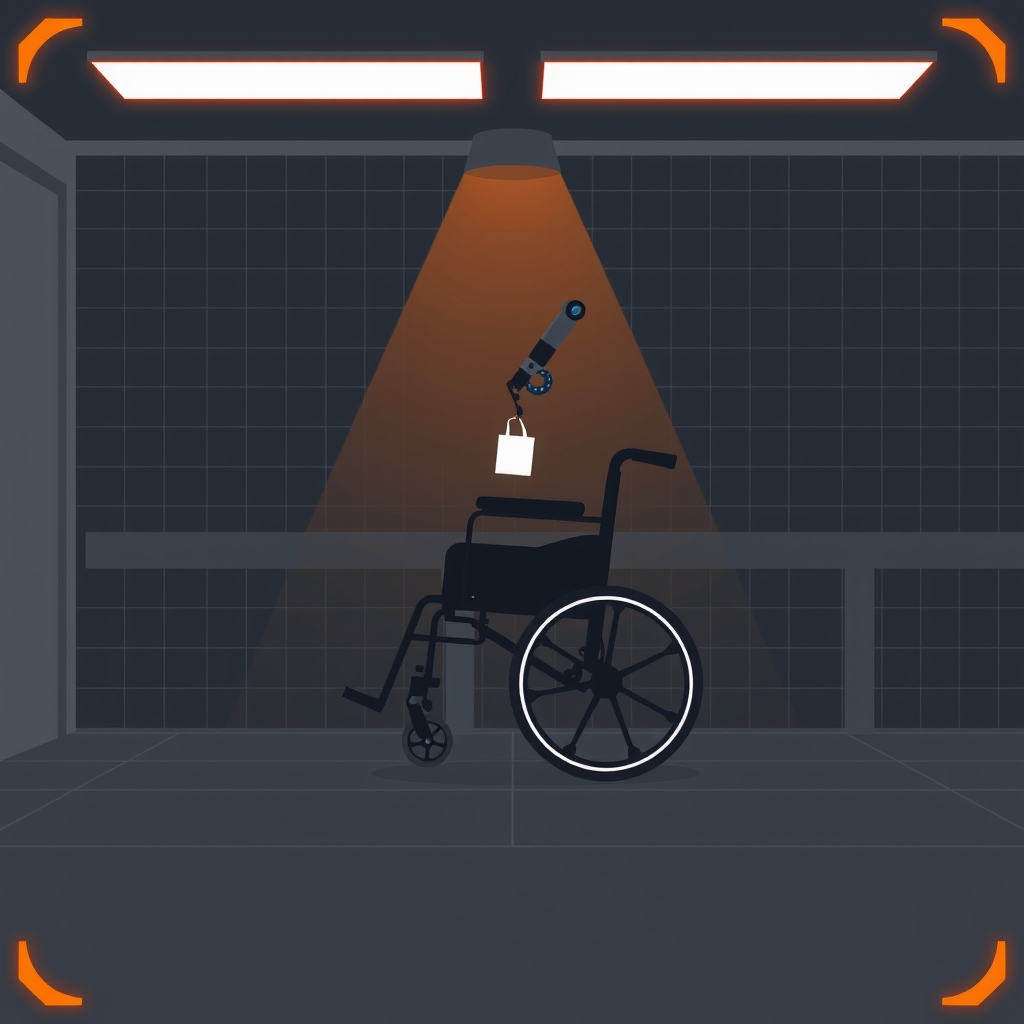
- The RAMMP system pairs a modern power wheelchair with a coordinated robotic arm that can fetch objects, open doors and assist with meals.
- Developers frame user control as a “spectrum of autonomy,” letting the rider dial assistance up or down in real time.
- A federated‑learning model will let individual chairs upload new manipulation routines to a shared repository.
- The U.S. robotic‑wheelchair market is projected to grow from $49.16 M in 2025 to $113.04 M by 2035 (CAGR 8.72%).
- Globally the segment could expand from $152.21 M in 2025 to $425.72 M by 2035 (CAGR 10.88%).
- ATDev’s founders anticipate an FDA‑cleared, insurance‑reimbursable chair within the next five years and are already testing open‑source AI models from Meta.
Introduction
ATDev reports that about three and a half million power‑wheelchair users reside in the United States. The company is building a next‑generation wheelchair that adds a sensorized chassis and a robotic arm to give users more independence during daily activities.
The RAMMP platform
Program background
RAMMP (Robotic Assistive Mobility and Manipulation Platform) is an ARPA‑H‑funded initiative led by the University of Pittsburgh. ATDev, headquartered in Orange, California, participates as an industry partner focused on autonomous wheelchair development.
Mechanical and electronic redesign
Todd Roberts, ATDev’s co‑founder and CEO, describes the base as “an extremely stable mobile robotic base … with a sensorized base with a robotic arm.” The team is discarding legacy power‑electronics and rebuilding the electronics and software architecture from the ground up to support the computational load of perception, planning and arm control.
Manipulation capabilities
The coordinated arm is intended to perform reaching and lifting tasks that many wheelchair users cannot manage on their own. ATDev envisions the chair helping with eating, drinking, opening doors and turning on lights, and it is also looking at tele‑operation features that would let a user issue commands from bed.
Shared‑autonomy model
ATDev does not push a single level of automation. Instead, it offers a “spectrum of autonomy,” where the rider decides moment‑to‑moment how much assistance the chair provides. In shared‑autonomy mode the chair makes micro‑adjustments while the user steers the overall path, and the rider can intervene instantly if the system behaves undesirably.
Safety and reliability focus
Working with users who have limited motor control raises the bar for reliability. Roberts notes that “one of the biggest challenges is safety when it comes to robotics and working with this population.” The design therefore emphasizes robust e‑stop handling, repeatable manipulation and a clear manual‑override path for the rider.
Learning across the fleet
A distinctive part of RAMMP is its federated‑learning strategy. Kent explains that the team is planning “a federated learning approach… so our chairs will be able to learn from each other.” When a user teaches a chair a new routine—such as opening a specific cabinet—the learned model can be uploaded to a shared repository, allowing other chairs to download the capability.
Partnerships that accelerate perception
ATDev is working with Meta to apply open‑source AI models to its perception stack. Roberts says, “Meta has bet on open‑source, and we as a company and as a program with RAMMP are betting on open‑source more broadly.” The collaboration targets rapid environment segmentation, a prerequisite for reliable operation in the varied layouts of care facilities.
Regulatory outlook and timeline
Current FDA pathways cover conventional power chairs, but there is no existing regulatory roadmap for self‑driving, self‑manipulating robotic personal mobility platforms (Roberts). ATDev plans to work with regulators to extend the existing framework. The founders state that an FDA‑cleared, insurance‑reimbursable version could be ready within the next five years.
Market context
The commercial opportunity is reflected in two recent forecasts:
| Scope | 2025 value | 2035 projection | CAGR |
|---|---|---|---|
| U.S. robotic wheelchairs | $49.16 M | $113.04 M | 8.72 % |
| Global robotic wheelchairs | $152.21 M | $425.72 M | 10.88 % |
These numbers illustrate a strong growth trajectory driven by an aging population and increasing adoption of AI‑enabled mobility solutions.
Why the timing matters for care facilities
The ARPA‑H and federal government have recognized a looming need as baby boomers age, noting a large installed base of three and a half million power‑wheelchair users that could become robotic platforms in homes and care settings. By adding autonomous manipulation, ATDev’s chair could help reduce routine‑task workload for caregivers while preserving user dignity, though this benefit remains to be demonstrated in practice.
Conclusion
ATDev’s RAMMP wheelchair merges a stable, sensor‑rich base with a collaborative robotic arm and a user‑driven autonomy model. With an estimated 3.5 million U.S. power‑wheelchair users, market forecasts that see the global segment rising to $425.72 M by 2035, and a projected five‑year path to FDA clearance, the platform arrives as a concrete option for care facilities seeking to augment their staff and improve resident independence.
Sources
This article was researched and fact-checked against the following sources:
- ATDev gives update on its journey building autonomous wheelchairs - The Robot Report (therobotreport.com)
- ATDev gives update on its journey building autonomous wheelchairs - MassRobotics (massrobotics.org)
- Robotic Wheelchair Market Size to Hit USD 425.72 Million by 2035 | Research by SNS Insider (sg.finance.yahoo.com)
- Bedrock Robotics' first operator-free excavator deployments take off - The Robot Report (therobotreport.com)
- Robot Videos: Unitree Humanoid, Bio-Inspired Bots, More - IEEE Spectrum (spectrum.ieee.org)